I love jewelry. I love how diverse it is, how customizable it is to one’s personality, and of course, that it’s made to be beautiful—a craft based on aesthetic as much as it is on function. What is most interesting to me about jewelry is that it is often symbolic: it is valuable because it is a tangible marker for something else that is valuable. The value I place on my own collection of jewelry is derived from sentiment—the pieces that were given to me are also the most valuable, because they are a symbol of solidarity and affection between me and someone else. What a pretty way to convey this!

Smeagol loves jewelry too. GIF from Tenor.
The fact that jewelry has been made for thousands (and possibly hundreds of thousands) of years tells me I am not alone in my appreciation (although presumably my experience with jewelry is rather different). (Pre)historically speaking, the craft, function, and meaning behind jewelry are all quite diverse across cultures and through time. An early use is often cited as being a signifier of social status, reserved solely for those in the upper ranks of society. Others include simple function (e.g. a brooch to clasp together fabric) and talismanic ornaments for protection against ill-will or evil spirits (most commonly associated with ancient Egypt).*

Eye of Horus amulet. Photo from John Hopkins Archaeological Museum.
While jewelry-making can be traced far back to our early Homo sapiens ancestors, it has been speculated to have also been practiced by our hominin relatives. Some of the early pieces of what we have deemed to be jewelry has come from Neanderthals, commonly made of bone and shell. Notably, perforated shells strongly linked to Neanderthal occupation have been found at Cueva de los Aviones in Spain, which according to Dr. João Zilhão is “widely accepted as evidence for body ornamentation, implying behavioral modernity” (Zilhão et al., 2010).
This has sparked debates on Neanderthal capabilities both cognitively and physically. On a cognitive level, it is likely that Neanderthals had a more nuanced understanding of symbolism than previously thought (although it is equally posited by scientists that they only copied Homo sapiens. See this article for a very general overview on this). As I mentioned before, jewelry is often a symbolic craft, acting as a tangible marker for an intangible value. This brings us to ask what sort of value Neanderthals placed on their own jewelry(making). On a physical level, while Neanderthals have been regarded as being more capable of “brute force”, studies have shown that they are actually more dexterous than this crude stereotype would have us believe. Of course, dexterity and precision are needed for the crafting of jewelry, body ornaments, and the like. This illustrates the important aspect of jewelry—that it is made by someone, somewhere, with some sort of specialization. We mustn’t forget that jewelry is not just a finished product, but a time-consuming process that calls for particular skill, which apparently Neanderthals had.
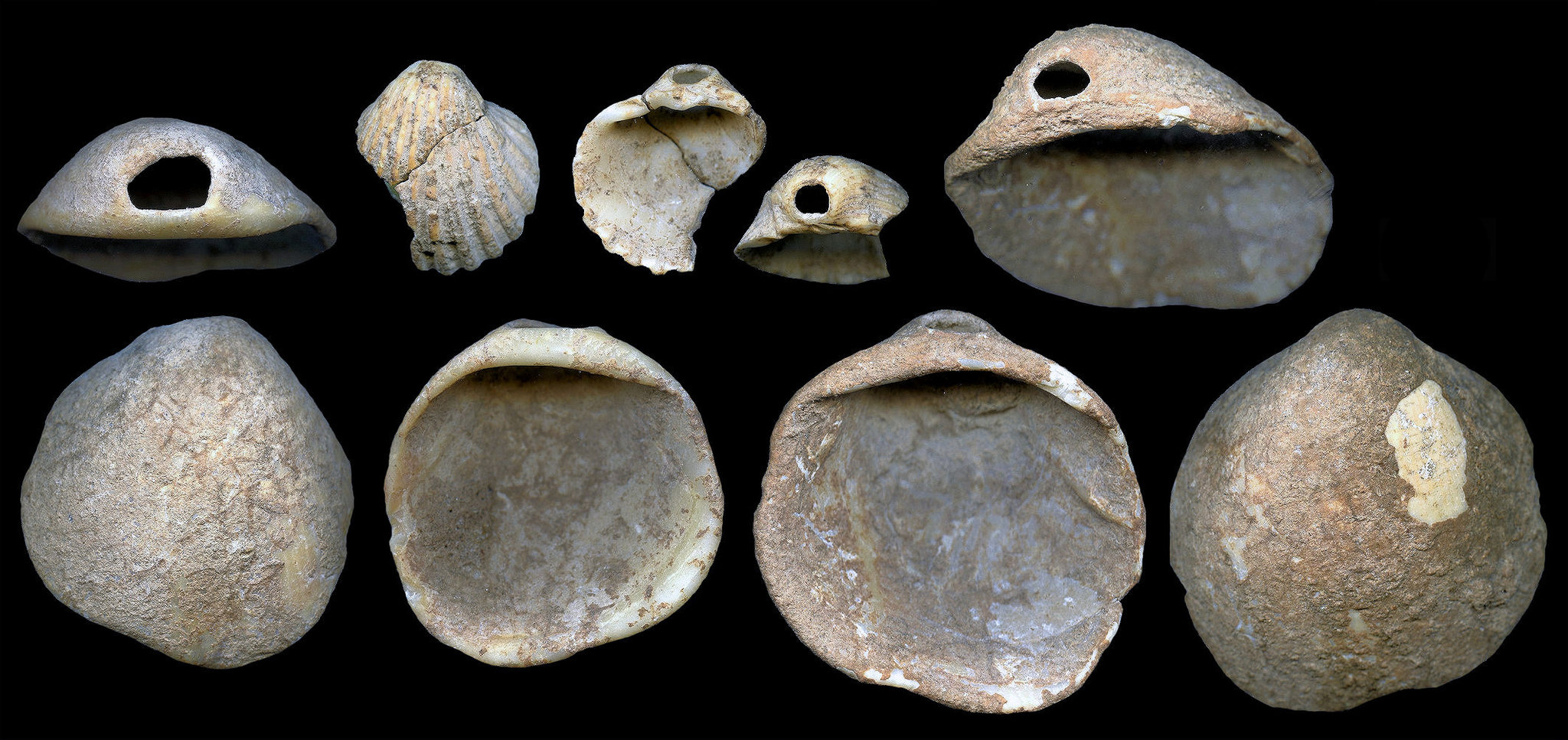
Three perforated shells from Cueva de los Aviones. Photo from PNAS.
All this talk about Neanderthal jewelry has gotten me to wondering what jewelry is after all. So far as I’ve described in this blog, jewelry is a vague concept, so I’ve attempted to establish some sort of definition. Merriam-Webster defines jewelry as:
ornamental pieces (such as rings, necklaces, earrings, and bracelets) that are made of materials which may or may not be precious (such as gold, silver, glass, and plastic), are often set with genuine or imitation gems, and are worn for personal adornment.
According to the Free Dictionary, jewelry is defined as:
objects of personal adornment, as necklaces, rings, bracelets, or brooches, esp. when made of precious metals, gemstones, or pearls and distinguished by very fine design and craft.
Drawing from both definitions, jewelry can be defined as personal (bodily) ornaments made of various materials and marked by fine design and craft.
I appreciate this final definition because it is inclusive of the many tangible, physical, and cognitive resources that go into jewelry making that are often overlooked today. For example, in a gemology episode on the Ologies podcast, gemologist Kelly Schick conveys her awe at the concerted effort that goes into creating and selling a final product:
Diamond dealers, gem dealers—it connects to mining in […] Africa and Asia and all these different places. And you learn […] that so many people are involved in the process of getting a stone from the earth, taking it from the earth to […] a piece of jewelry or to a crystal in a shop for sale, so it’s really kind of amazing all the work and the people that go into the whole industry.
It has long been exemplified through popular culture that we place a disproportionate value on gold and precious gems (see “Diamonds Are a Girl’s Best Friend”), but as consumers, we never seem to ask, how did it come to this? We know that early forms of jewelry had been made with string (textiles), shell and bone (which requires a means to drill a hole), and pigments to color the pieces—all of which offer insight towards how we came to create and value jewelry today.
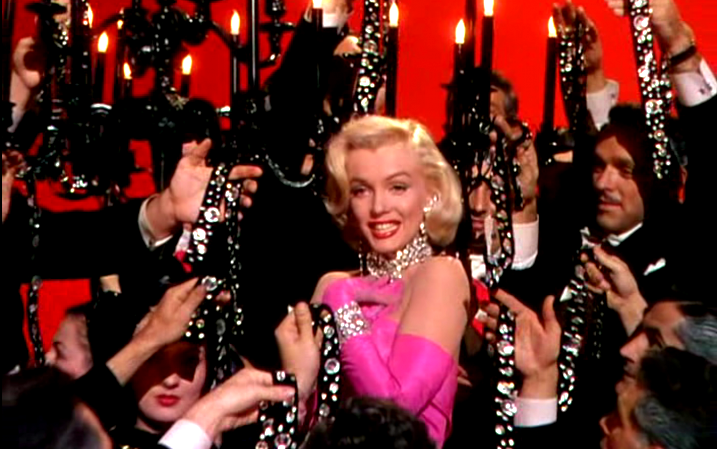
Marilyn Monroe from “Diamonds Are a Girl’s Best Friend”. Photo from Anthill.
Through the aptly named ages, we learned to mine and smelt various metals, a technology which was used for crafting many useful things, including jewelry. If we fast forward to today, we see that these metals have become inextricable to what we define as fine jewelry, which continues to be given symbolic meanings similar to archaic conceptions. There is no doubt that our early uses of metallurgy in jewelry making have led to how we craft and place meaning on jewelry today (including some very quirky and expensive “revivals” a la Prada).
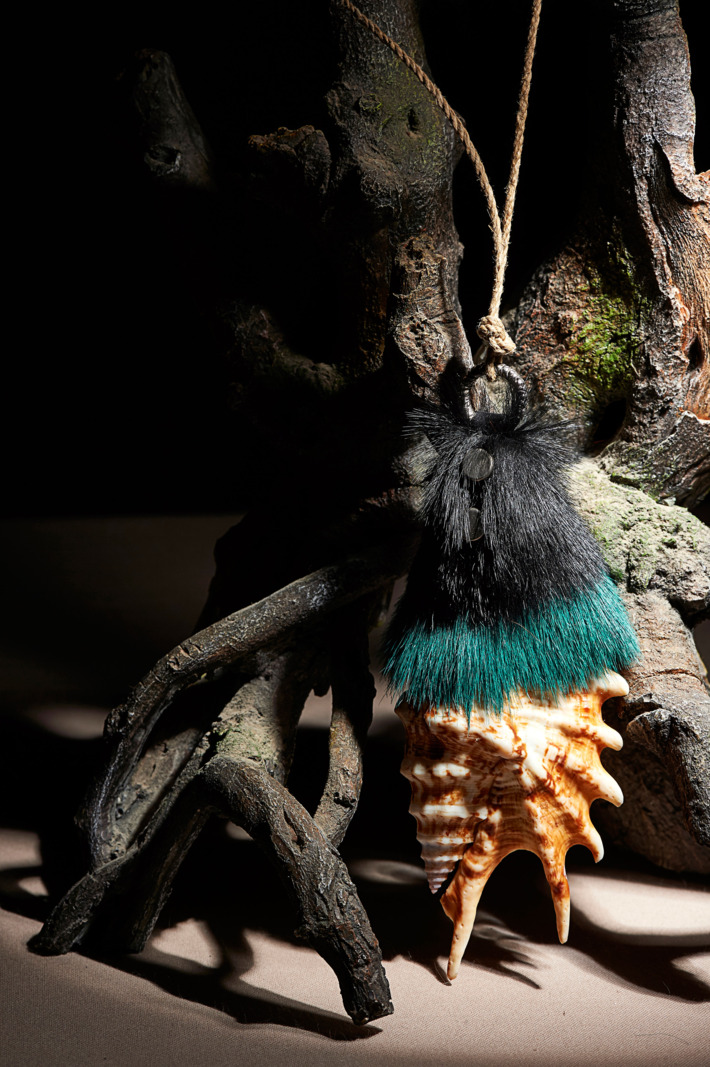
Photo of Prada talisman jewelry from The Cut.
In my forthcoming posts, I am hoping to shed some light on jewelry and jewelry making mostly through metalsmithing examples, although it will be impossible to single out metal as a sole material, as no technology stands alone! Through this introductory post, I am hoping to have given a glimmer of insight towards how multifaceted jewelry making is, and to underscore that our jewelry of today (those sentimental pieces of which I fondly spoke) has deep roots in prehistory.
*For an interesting article regarding the often poorly documented contexts of jewelry in early archaeology and how that has transferred to museum displays, see “Adornment, Identity, and Authenticity: Ancient Jewelry In and Out of Context” by Megan Cifarelli.
 Jewelry Making Technologies